
Farm diversification is no longer a side issue for many farming businesses. It has become a serious part of long-term planning. With pressure on traditional income streams, rising costs and uncertainty in agricultural markets, many farmers are looking for ways to create additional revenue and make better use of land, buildings and location.
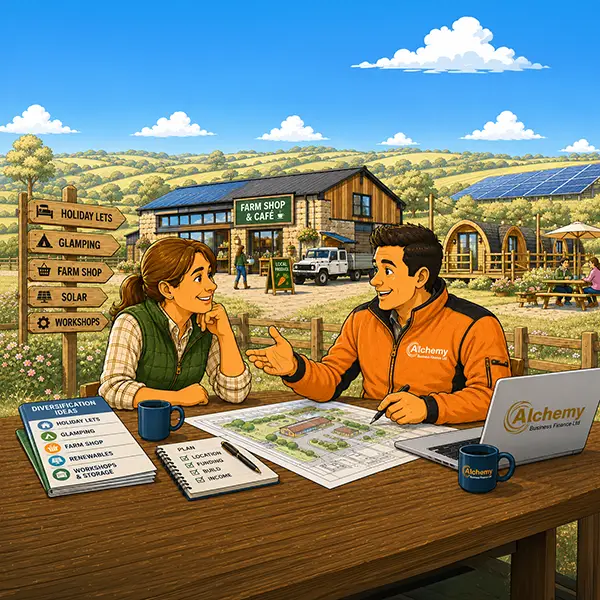
Diversification can take many forms. Some farms convert buildings into holiday accommodation. Others open farm shops, cafes or visitor attractions. Some develop glamping sites, equestrian facilities, commercial storage, workshops or renewable energy projects. The right project depends on the farm, the location, the assets available and the people involved.
The attraction is clear. Diversification can create a more stable income stream, reduce reliance on commodity prices and help bring the next generation into the business. It can also make use of buildings or areas of the farm that are not contributing fully to income.
However, funding can be one of the biggest barriers. A project may be commercially sensible, but that does not mean it will fit a traditional lending model. Many lenders want proven income, established trading history and a familiar business structure. Diversification projects often involve forecasts, new markets and development work before revenue begins.
This can create frustration for farmers. They may have a strong existing business, valuable assets and a well-considered project, but still struggle to secure funding because the new income stream is not yet proven.
This is where a practical, asset-led approach can help. Instead of looking only at the future income from the project, it is important to consider the existing farm, the asset base, the location, the purpose of funding and the long-term resilience the project could create.
Timing is another key factor. Many diversification projects depend on seasons. Holiday accommodation may need to open before spring or summer. A farm shop may need to be ready ahead of a local tourism period. A renewable project may depend on contractor availability or grid connection. If funding is delayed, the project may miss its strongest commercial window.
Farmers considering diversification should prepare carefully. A clear plan is essential. This does not need to be overly complicated, but it should explain what the project is, why it is suitable, what it is expected to cost, how income may be generated and what assets support the wider business.
It is also useful to think about the funding requirement in stages. Some projects may need upfront capital for planning, professional fees or early works. Others may need a larger facility for construction or fit-out. Understanding the timing of costs can make the funding conversation clearer.
Alchemy Farming Finance supports diversification by looking at the whole picture. We understand that a new project may not have trading history, but that does not mean it lacks potential. If the existing farm is strong and the assets are available, there may be a practical route to funding.
Diversification should be about building resilience, not creating unnecessary risk. The right funding structure should support the project without placing unmanageable pressure on the core farm. That is why the purpose, timescale and repayment fit all matter.
For farms with underused buildings, strong visitor locations or clear opportunities to create additional income, diversification can be a powerful route forward. The key is to match the ambition with realistic planning and practical funding.