
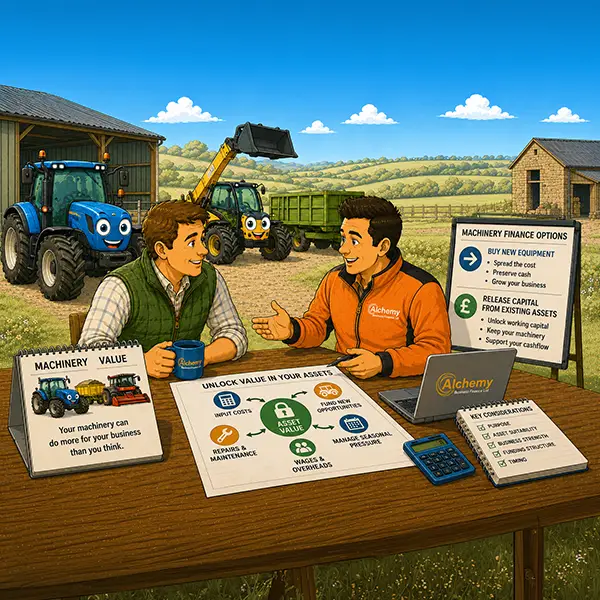
Machinery is one of the biggest investments on most farms. Tractors, combines, telehandlers, trailers, loaders, balers and specialist equipment are essential to productivity. Without the right machinery, work can slow down, contractor costs can increase and key seasonal windows can be missed.
At the same time, machinery ties up capital. A farm may have hundreds of thousands of pounds invested in equipment, but that value may not be helping day-to-day cashflow. This is why machinery finance can be an important tool for farmers.
There are two broad ways to think about machinery finance. The first is funding the purchase of equipment. This may help a farm acquire a machine without using all available cash at once. The second is releasing capital from machinery already owned by the business. This can provide working capital while the farm continues to use the equipment.
The second option is particularly relevant for asset-rich farms. A business may own machinery outright but still face cashflow pressure. Instead of selling equipment, which could disrupt operations, the farm may be able to use the machinery to support a funding structure.
This can be useful in several situations. A farm may need to cover input costs, repair bills, tax payments, rent, wages or seasonal pressure. It may need to fund a project or take advantage of an opportunity. It may also need to restructure short-term pressure into a more manageable form.
The important point is that machinery should be viewed as part of the overall financial strength of the business. It is not just a cost. It is an asset that can help support flexibility when used sensibly.
Traditional lenders may not always take this view. They may focus on accounts, credit history or standard affordability models without fully considering the value and role of machinery in the farming operation. An asset-led review can provide a more practical perspective.
When considering machinery finance, farmers should be clear about the purpose. What is the funding needed for? How will it improve or protect the business? How does the structure fit the farming cycle? Which assets are suitable? Are those assets essential to the business, and will they remain in use?
Asset age and condition does not matter, but well-maintained machinery with a clear market value will enable a higher value to be considered. Photographs, serial numbers, valuations and ownership information can all help speed up the process.
Speed can also be important. Farming does not always allow for long delays. Machinery failures, seasonal windows and supplier commitments can create urgent funding needs. A practical funding provider should understand that timing is part of the commercial reality.
Alchemy Farming Finance uses an asset-led approach to help farmers explore options. We consider the machinery, the business, the reason for funding and the desired outcome. The goal is to create a solution that supports the farm rather than complicating it.
Machinery finance should not be seen only as a way to buy new equipment. It can also be a way to unlock value that already exists within the business. For many farms, that can make the difference between being asset-rich but cashflow-tight and having the flexibility to move forward.